
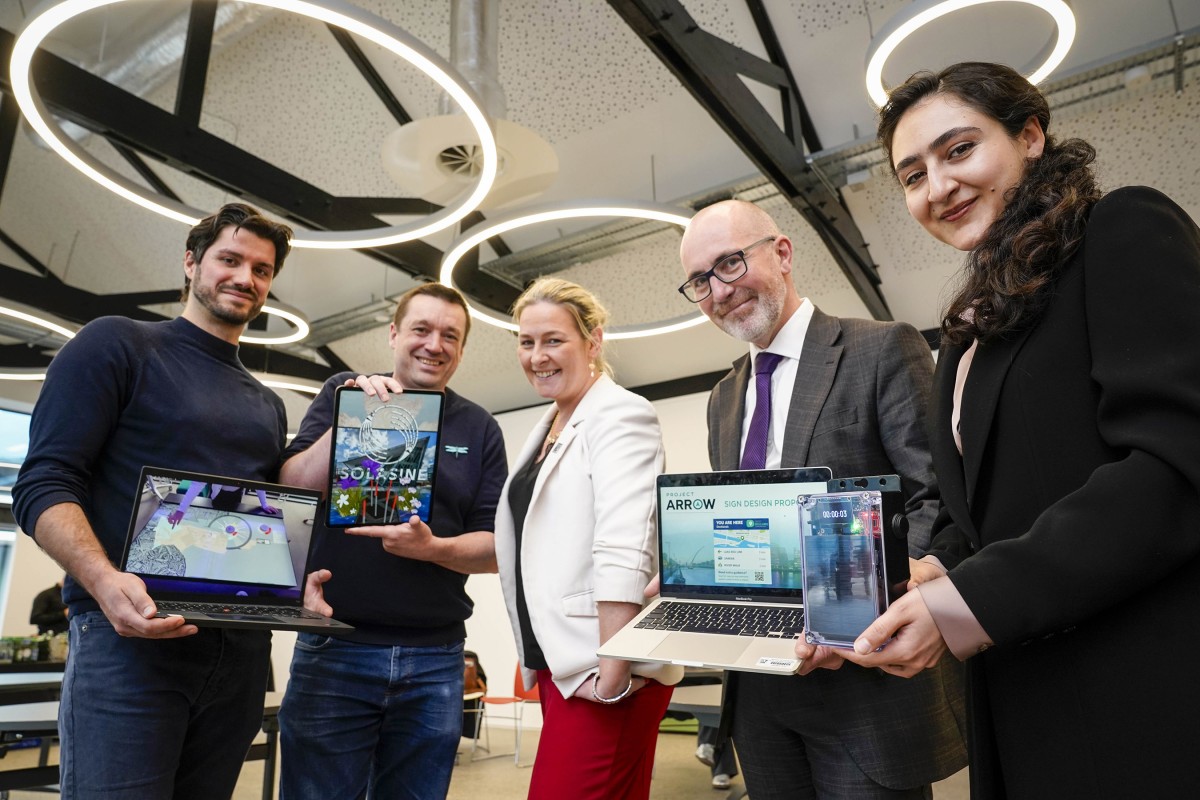
Smart Docklands has announced a €50,000 investment across four innovative pilot projects, following the conclusion of its second Call for Pilots 2025/2026. Selected from a competitive pool of 53 applications, each pilot will receive €12,500 in seed funding to address real urban challenges across biodiversity, accessibility, digital inclusion and community participation in Dublin’s Docklands.
Building on the success of the inaugural Call for Pilots, this second round reflects the growing ambition and diversity of community‑led innovation emerging across the Docklands. The selected projects combine research excellence, inclusive design and practical experimentation to test solutions shaped by local needs and lived experience.
The four pilot winners are:
WingSense (Trinity College Dublin) focuses on biodiversity and urban greening, using low‑power mmWave radar sensors to continuously detect insect and pollinator activity, day or night and in all weather conditions. The system captures no images or audio, ensuring privacy, while machine learning converts data into actionable insights for cities.
ScannAR (Solasine) delivers a fully accessible, web‑based augmented reality experience via QR codes—no app required. Scanning unlocks 3D content, audio narration and local storytelling designed inclusively for blind, visually impaired, deaf and hard‑of‑hearing users.
ARROW (The Convention Centre Dublin) introduces an inclusive wayfinding layer co‑designed with neurodiverse users, combining “what to expect” guides with typical and real‑time sensory environment indicators into a single, place‑based service.
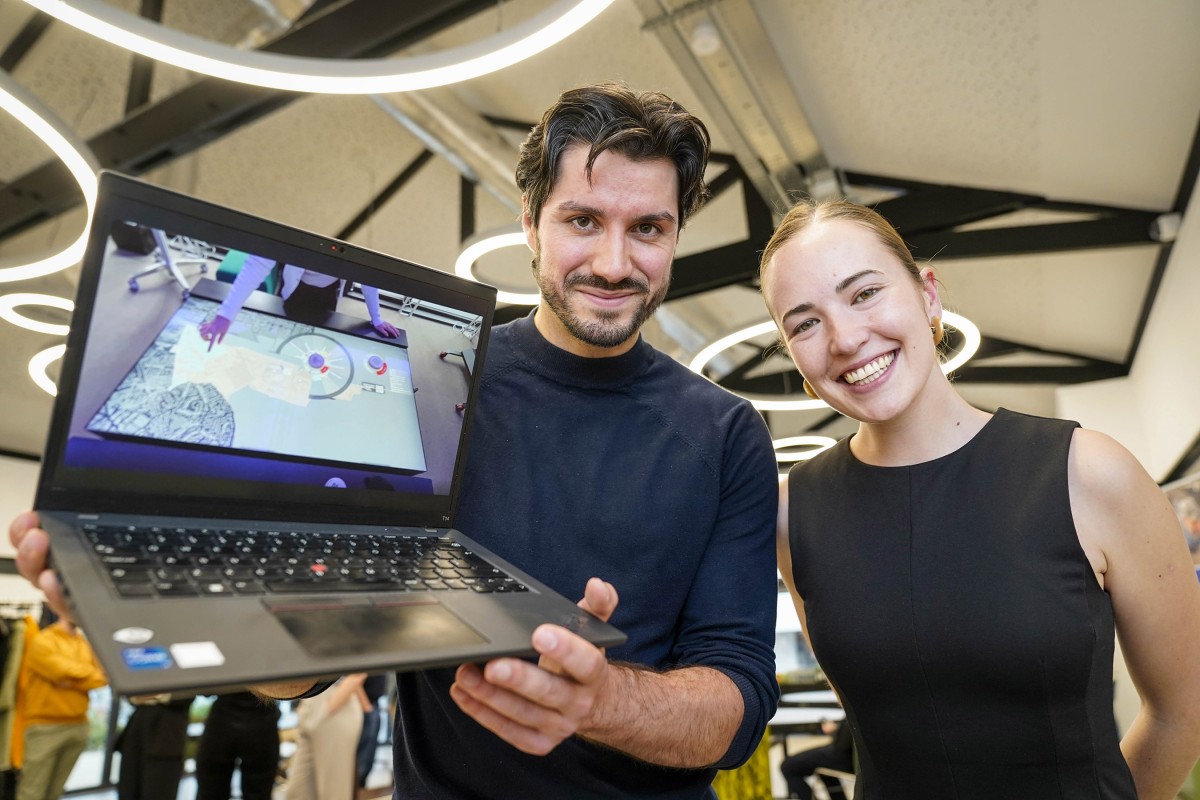
Raytown Roundtable (Codema – Dublin’s Energy Agency) pilots a touch‑based interactive table at the Raytown Energy Dock in Ringsend/Irishtown, enabling residents to explore their neighbourhood and shape local decisions through an accessible, hands‑on interface that requires no digital skills.
Speaking about the programme, Lord Mayor of Dublin, Councillor Ray McAdam, said:
“Dublin’s Docklands area has long been a hub of innovation and creativity, placing the city in a strong position to enhance public services through technology‑enabled solutions. The Smart Docklands Pilot Programme helps to ensure that innovation is community‑led, focused on real needs, and delivering measurable impact. The four selected pilot projects demonstrate Dublin’s ambitions to be more inclusive and forward‑thinking, and will make our city work better for everyone. I’m proud to see it happening right here in the Docklands.”
Nicola Graham, Smart Cities Programme Manager, Dublin City Council, added:
“Pilots like these are how we deliver meaningful change within the council. They let us trial new approaches in real‑world settings, learn fast, and build the evidence needed to scale what works. The strong number of applications this year reflects a clear commitment to developing solutions to the challenges identified by the Docklands community.”
Professor Dan Kilper, Director, CONNECT Centre, Trinity College Dublin, said:
“These pilots are not just proof‑of‑concept experiments — they are live research environments that generate insights no laboratory can replicate. Bridging that gap between academic innovation and lived experience is precisely what the CONNECT Centre exists to do, and Smart Docklands gives us the ideal platform to make it happen.”
Dr Karolina Anielska, Smart Docklands Programme Manager, concluded:
“I am incredibly proud of what this second round represents. When we launched the first Call for Pilots, we set out to put the community at the heart of smart city innovation — and the response has been overwhelming. To see that grow into 53 applications and four outstanding winners spanning biodiversity, accessibility, and digital inclusion is a moment to truly celebrate. This is exactly what Smart Docklands was built to do.”
Established in 2017, the Smart Docklands programme brings together academia, local government, industry and residents to address urban challenges through the deployment of new and emerging technologies. Delivered in partnership between Dublin City Council and the CONNECT Research Ireland Centre for Future Networks at Trinity College Dublin, each Call for Pilots strengthens this collaborative model. The diversity of this year’s cohort, which spans into ecology, heritage, accessibility and civic participation, demonstrates how smart technology, when guided by community insight, can deliver inclusive and meaningful urban innovation.
For more information, visit smartdocklands.ie.